What Does Sustainable Learning Look Like in VET? Meet ProVEST’s 11 Cases
Vocational Education and Training (VET) prepares millions of young people for work (European Centre for the Development of Vocational Training, 2024). Today it also helps prepare them for Europe’s green transition (European Commission, 2015). ProVEST set out to find real classrooms and workplaces where this already happens well. Across five countries, partners documented 45 such cases and chose 11 to study closely. This post explains what these learning environments are, and how the 11 were as a representative set.
What is a PTLES?
PTLES stands for Powerful Transformative Learning Environments for Sustainability. It is a learning environment that builds practical skills, encourages students to rethink how they act, and weaves sustainability through both.
The idea brings together three strands of research: powerful learning environments in practical subjects in secondary VET (Pauwels et al., 2023), transformative learning (Mezirow, 1978), and learning for sustainability (Mulvik et al., 2024). In practice, it means authentic tasks, real problem-solving, room for reflection, and sustainability built into everyday work.
How we found the cases
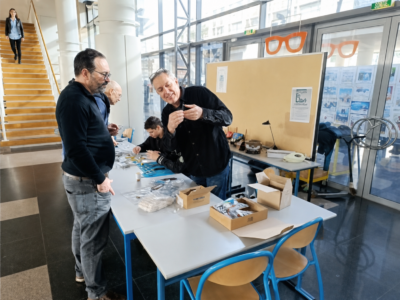
Partners in Belgium, Estonia, France, Germany and Spain looked for collaborations between schools and companies with strong sustainability learning. They documented 45 cases through observation, interviews and country reports.
To read every case in the same way, the team used the PTLES Grid: a shared checklist of 20 features of a powerful, transformative and sustainable learning environment. These 20 features fall under the five building blocks of a PTLES:
- Higher-order thinking and complex skills: self-regulated learning, collaborative learning, interdisciplinary tasks in VET, interdisciplinary tasks in sustainability, technology-enhanced learning, problem-solving, metacognitive skills, reflection in the nuance of conscious learning, and reflection in the nuance of critical thinking.
- High-quality instruction: a clear lesson structure with goals and activities, promoting interaction, transfer of knowledge, building on students’ prior knowledge, and learning activities pitched just beyond what students can already do.
- Authentic tasks: learning tasks set in real-world contexts.
- Adaptive education: assessment for learning, differentiation, and challenging tasks that affect students emotionally, then prompt them to actively engage in the tasks.
- Classroom management: well-organised classroom practice, and support for student behaviour.
Each case was checked against these features, so the team could compare very different classrooms on the same terms.
How we narrowed to 11
All 45 cases showed strong PTLES features. Partners reviewed each other’s work using the grid, then chose 11 that together cover a range of sectors and countries. These 11 went forward for a detailed European comparison, and the cases left out remain valuable examples in their own right.
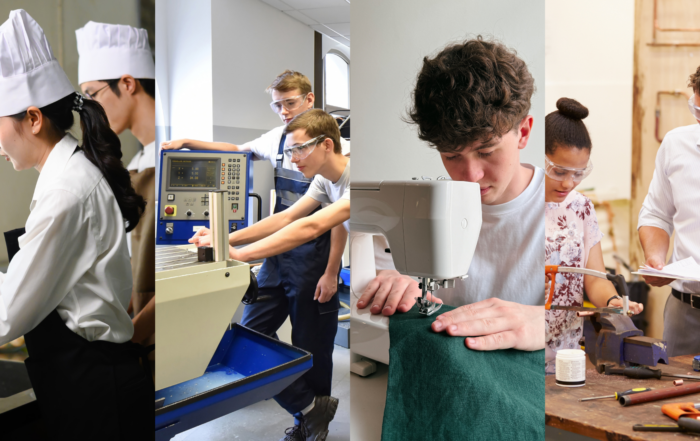
The selected cases span four sectors (catering, care, industry and art) across all five partner countries.
Belgium
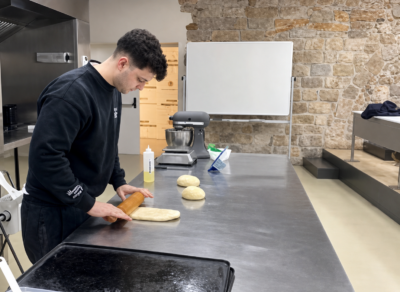
- Restaurant & Kitchen (Mosa-RT) — students run a real school restaurant from menu to service.
- Self-critical childcare workers of the future (Spectrum College) — dual-track students reflect on their own practice while working in daycare settings.
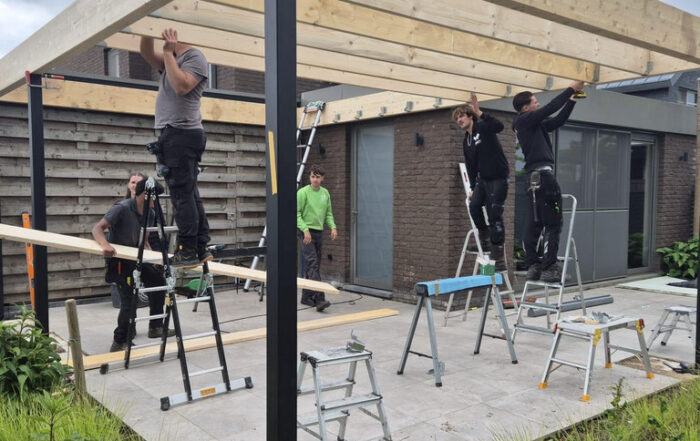
- WOOD-YOU (GO! De Prins Diest) — woodworking students make commissioned products while designing out material waste.
Estonia
- Sustainable Technologies (VOCO and Tartu Art School, with Thermory) — two schools build a shared curriculum around sustainable technologies.
- Open seminar on assessing internship results (Tartu Art School, with Polywerk 3D) — creative-industry students review their internships together with company partners.
France
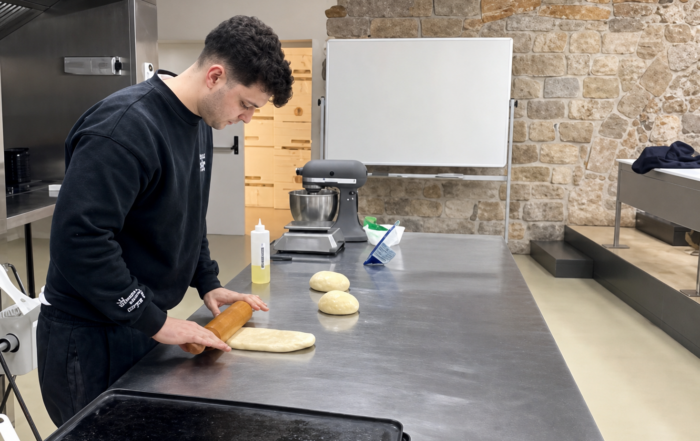
- Culinary Design (Largentière) — culinary students design plant-protein dishes that imagine a more sustainable food future.
- Beauty, well-being and European citizenship (Pierre Mendès France) — students work with local producers on sustainable cosmetics and civic projects.
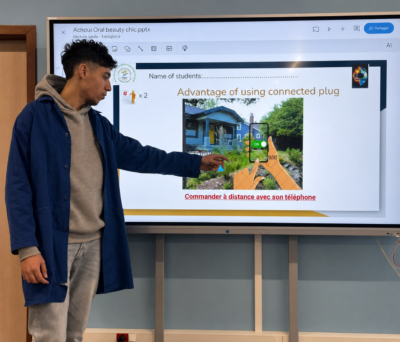
- Student feedback with open-source tools (Gabriel Péri) — students use free, open-source software, reuse hardware, and reflect on responsible technology.
Germany
- Adult learning with women with a migration background (Bildungszentrum Lernen+Technik) — a programme tailored to help women with a migration biography enter the labour market.
- VocEd 4.0 (TUD) — three schools each make different parts that combine into one product, mirroring Industry 4.0 networks.
Spain
- CIC studio-based learning environment (CIC Cicles Formatius) — design students take on real client commissions in a working studio model.
What this tells educators
The clearest lesson is reassuring: you do not need a brand-new programme to teach for sustainability. Powerful learning is already happening in ordinary VET classrooms and workplaces. The PTLES Grid helps teachers and mentors notice it, name it, and build on it.
Over the coming weeks, we will spotlight each of these 11 cases on our social media channels. Follow along to see how teachers and mentors across Europe are shaping sustainable VET and ask yourself: which of these features do you already recognise in your own practice?
Follow us on LinkedIn and Instagram and subscribe to our newsletter so you never miss a post.
References:
European Centre for the Development of Vocational Training. (2024). Data insight: Vocational Education and training in the EU: Opportunities for further and higher learning (Cedefop: Vocational education and training statistics and indicators: Data Insight, p. 8).
European Commission. (2015). Latvian Presidency of the Council of the European Union and Ministry of Education and Science Republic of Latvia.
Mezirow, J. (1978). Education for perspective transformation: Women re-entry programs in community college. Center for adult education. Columbia University.
Mulvik, I., Torres, R., Chachava, M., Lekavičiūtė, E., Blasko, Z., McGrath, C., Garcia, I. E., Steponavičius, M., Berndt, J. (2024). Monitoring Learning for Sustainability: Developing a Cross-EU Approach, Final Report. European Union
Pauwels, L., Devos, G., Vaesen, J., Timbermont, E., Jansen, D., Placklé, I., & Tuytens, M. (2023). Bouwstenen voor opleiding en professionalisering van (duale) leraren technische en praktijkvakken in arbeidsmarktgerichte opleidingen: Voorbereidende onderzoeksfase: Systematische Reviewstudie (p. 63). Vlaams departement onderwijs en vorming. Brussel, Vlaamse Overheid.