Towards a community of learning: The transformation of De Prins (ADITE)
What does it take to transform a school? Not simply changing how students learn, but changing how teachers work, how people relate to one another, and how an entire educational community understands its purpose.
As part of the ProVEST Masterclass on Creating Powerful Transformative Learning Environments (PTLEs), we visited De Prins (ADITE) in Diest, Belgium, an inspiring example of organisational and educational transformation in vocational education and training (VET).
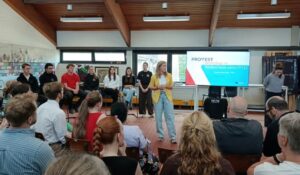
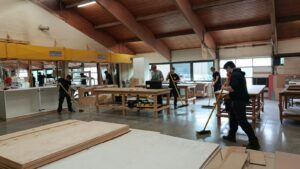
Guided by Nele Vanluyten, one of the driving forces behind Wood-You, the school’s innovative woodworking learning community, we explored three vocational learning environments at Campus Boudewijnvest: Graphic Design and Visual Communication, Carpentry and Woodworking, and Automotive Mechanics.
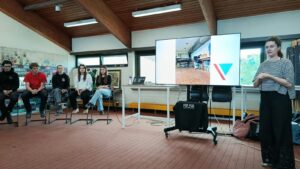
During the visit, Nele shared how, around ten years ago, ADITE was experiencing a significant decline in student enrolment, which became a catalyst for rethinking its educational model.
What followed was not simply an educational reform, but a profound transformation of the school’s organisational culture.
Transforming the organisation to transform learning
The journey began in 2014, when ADITE started working with external organisational coaches, including Prepared Mind, through the initiative Scholen Slim Organiseren (Organising Schools Smartly), alongside expertise from Flanders Synergy.
Rather than imposing a new educational model from the top down, the school introduced changing teams, bringing together teachers, students and parents to help shape its future.
This was a critical shift: teachers were no longer simply expected to implement change; they became active agents in designing it.
The transformation challenged established assumptions about teaching and learning. Teachers began moving from working as individual subject specialists towards co-teaching, collaborating in teams, coaching students and sharing responsibility for their development.
In 2018, ADITE adopted the De Prins identity and introduced a radically different educational approach, with more flexible learning arrangements, greater student autonomy and learning communities at the heart of school life.
Learning communities as enablers of transformative change
Perhaps the most powerful lesson from De Prins is that learning communities were not simply an outcome of the transformation; they became a mechanism for making transformation possible and sustainable.
By bringing students and teachers together in stable, collaborative communities, the school created the conditions for trust, belonging, shared responsibility and collective learning.
For teachers, these communities provided opportunities to question established practices, experiment with new approaches and collectively redefine their professional roles.
For students, they offered greater autonomy, personalised guidance and a stronger sense of belonging.
From the perspective of transformative learning, this is particularly significant. Sustainable change happens when people do not merely adopt new practices, but question their assumptions, rethink their roles and develop new ways of understanding themselves and others.
Vocational identity and pride: the emotional foundations of sustainable change
Another powerful insight from our visit was the importance of vocational identity, professional recognition and pride in craftsmanship.
In VET, learning is not only about acquiring technical skills. It is also about becoming someone: developing an identity as a carpenter, graphic designer, mechanic or another skilled professional. This identity is not fixed, but continuously shaped through participation, relationships and experiences within educational and professional communities.
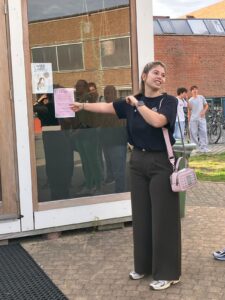
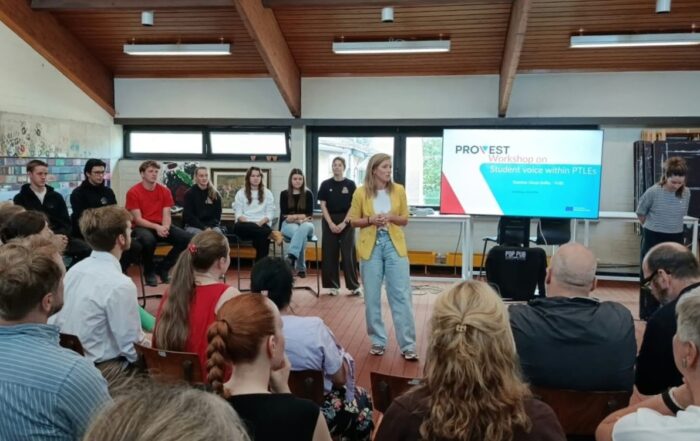
During our visit, Suzanne Decat, a general subjects teacher in VET at De Prins and a researcher involved in ProVEST, invited students to share their experiences through a Photovoice activity.. Through photographs and personal stories, students reflected on experiences that made them feel connected to the professionals they are becoming. Their perspectives offered valuable insights into how vocational identity and pride develop within their learning environments.
This illustrates an essential dimension of transformative education: students need opportunities not only to develop competencies, but also to recognise the value of what they do, express their perspectives and take pride in who they are becoming.
When students engage in authentic professional practices, take responsibility for meaningful work and see tangible results, they begin to perceive themselves not simply as students completing assignments, but as emerging professionals capable of creating value.
Vocational pride adds an important emotional dimension to vocational identity and can therefore become a powerful force for sustaining change. It strengthens students’ motivation, confidence and sense of purpose, while reinforcing teachers’ commitment to the social and professional value of vocational education.
The deeper lesson: transformation is a collective process
The De Prins experience reminds us that transformative change is not primarily about introducing innovative methodologies or redesigning educational spaces. It is about creating the social, organisational and emotional conditions in which people can change together.
Learning communities provide the relationships, trust and collective agency that make change possible. Vocational identity and pride give that change meaning, purpose and continuity.
Perhaps the most important lesson is this: lasting educational transformation happens when people stop seeing themselves merely as participants in a system and begin recognising themselves as co-creators of its own future.
This is precisely the kind of transformation that ProVEST seeks to foster through Powerful Transformative Learning Environments for a Sustainable Transition.