From Design to Completion: Woodworking Students Build Their Own Learning Path
“Danny, can we also lead the project ourselves?” This question came from one of our seventh-year woodworking students when we announced the new project. That was the moment I knew this project – building a full canopy for a real client – was the perfect opportunity to combine Powerful and Transformative Learning Environments (PTLE) with strong mentorship.
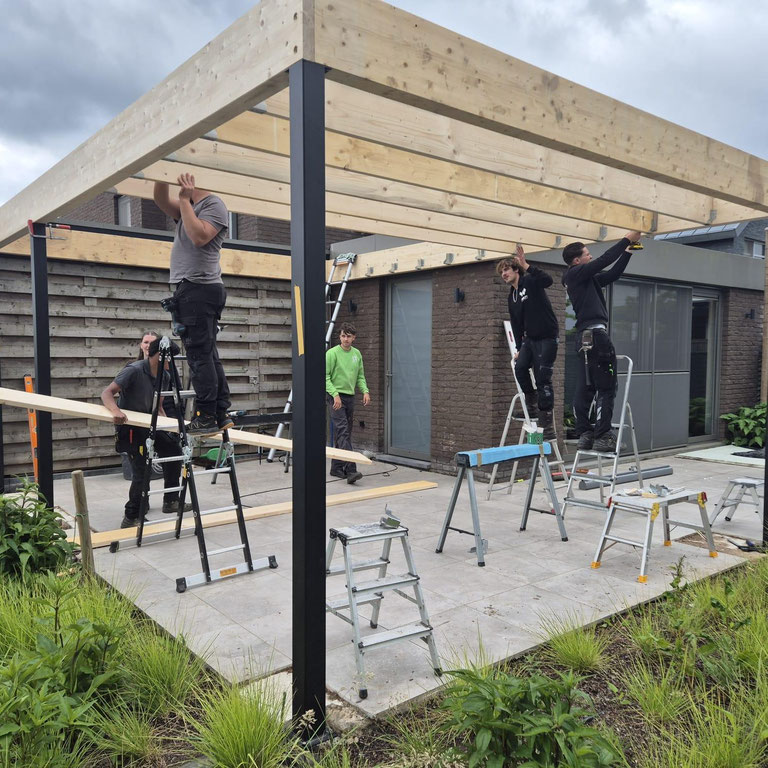
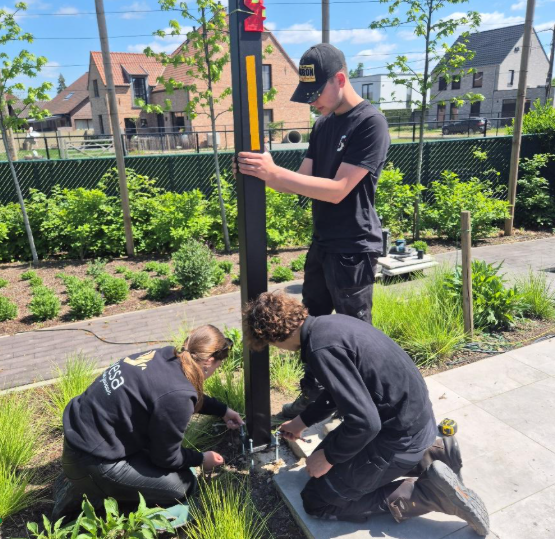
Mosa-RT aims to provide students with a powerful, real-world learning environment where they can complete a project from start to finish. An environment that reflects the job market and supports their own learning process. This year, the students in year 7 of Woodworking Dual Education program took on the challenge of designing, planning, and building a canopy for a real client. Everything was handled as authentically as possible. The students scheduled a meeting with the client and held a meeting to understand all wishes and expectations. They then searched for suppliers, gathered and analyzed three quotes, and discussed them with the client. They researched material options and visited the supplier to select the wood and other materials. Only then did the physical work begin: together, they built the entire canopy, from preparation to completion.
During this process, the PTLE approach truly came to life: teams took ownership of their planning, task division, and problem-solving. My role, along with that of the other instructors, shifted to that of a VET mentor: coaching, asking questions, brainstorming. We provided feedback when needed but allowed the students to make their own decisions. It was inspiring to see them take responsibility and motivate each other to deliver quality work.
This approach clearly demonstrated the power of combining self-direction with mentorship. The students not only learned how to build a project but also how to communicate with clients, evaluate quotes, and collaborate professionally. My advice to colleagues: dare to let go and trust the learning process.
By standing alongside the students as a mentor rather than in front of the class as a “leader,” you create space for true growth.
The project proved that practical learning becomes truly powerful when students experience ownership and have mentors to support them. How do you give your students the chance to complete a fully realistic project with room for initiative and tailored guidance?
*This blog post was written by Dual Learning Teacher Danny Duysters, from our Belgian VET school partner Mosa-RT .
Subscribe to our newsletter to stay updated and never miss our upcoming blog posts, offering direct insights from the people working in the field of VET.